THE MEDIUM IS THE MASSACRE: An Interview With Dennis Cooper & Zac Farley
by Ryan Akler-Bishop
from Issue 3
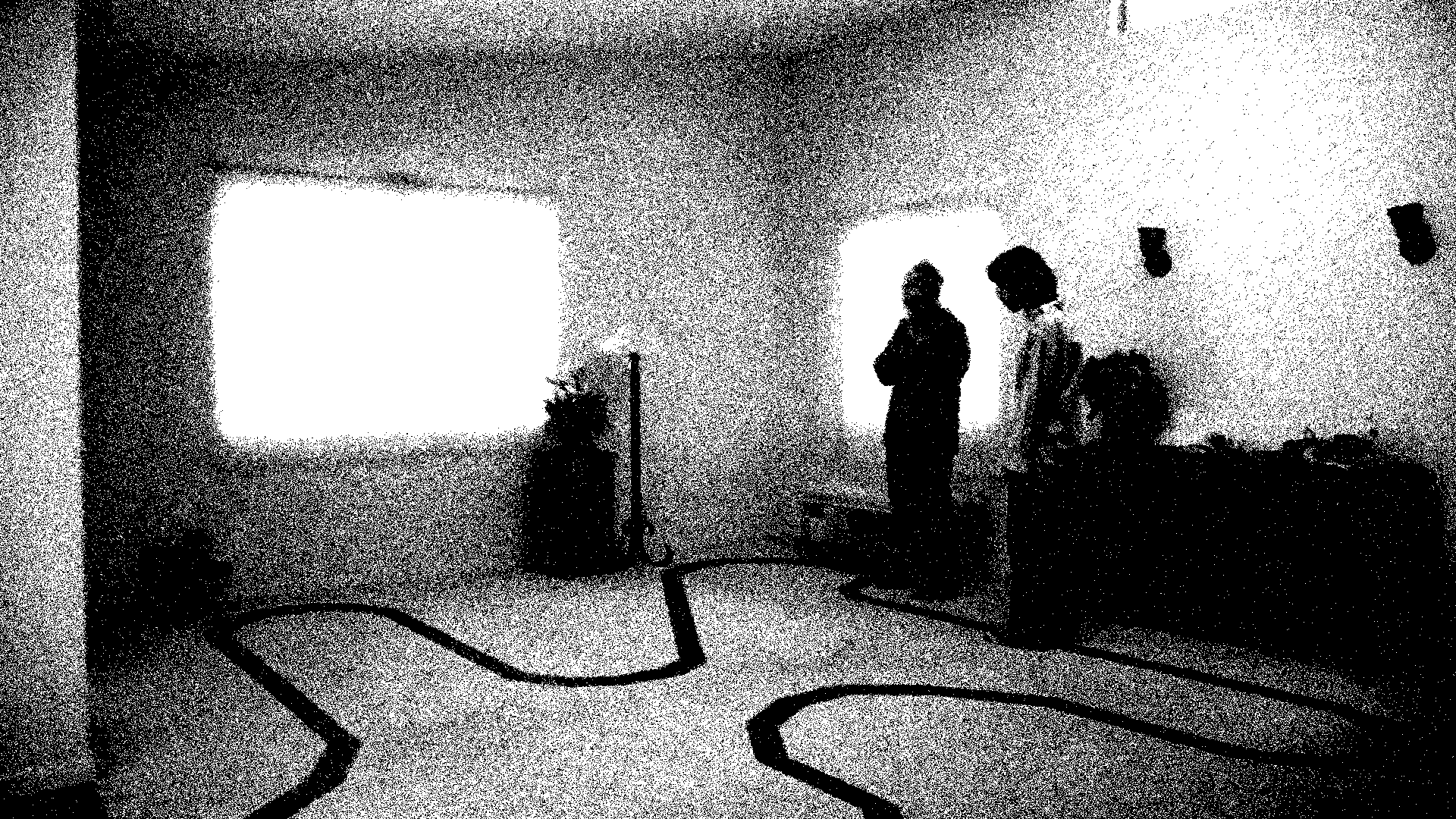
For over fifty years, Dennis Cooper has written works that unspool a gay death drive, building a corpus at the confluence of violence and eroticism. Yet despite the hyperviolent content of his literature, Cooper is a devoted formalist. In the lineage of great nouveau roman authors, his writing is about the limits of language and how words erect obstructions or dislocate truth.
Over the last decade, Cooper’s drifted away from text and embraced filmmaking. Alongside his co-director and dear friend Zac Farley, he’s now turned his focus towards probing the limits of the image. The duo concede that film cannot mimic the interiority of literature and, consequently, have adopted a visual language of alienation and externality. Their latest film, Room Temperature (2025), follows a Southern California family’s annual home haunt ritual. It imagines a gruesome, synthetic mirror realm where fathers murder their children in public performance, but blood is always mopped up, and the family unit reconvenes the next morning, unpunctured.
I spoke with Dennis and Zac about their close-knit collaboration, their fixation on failure, casting non-actors, home haunts, their relationships to fear, avoiding big budgets, and Dennis’ hatred of Pasolini’s Salò (1975).
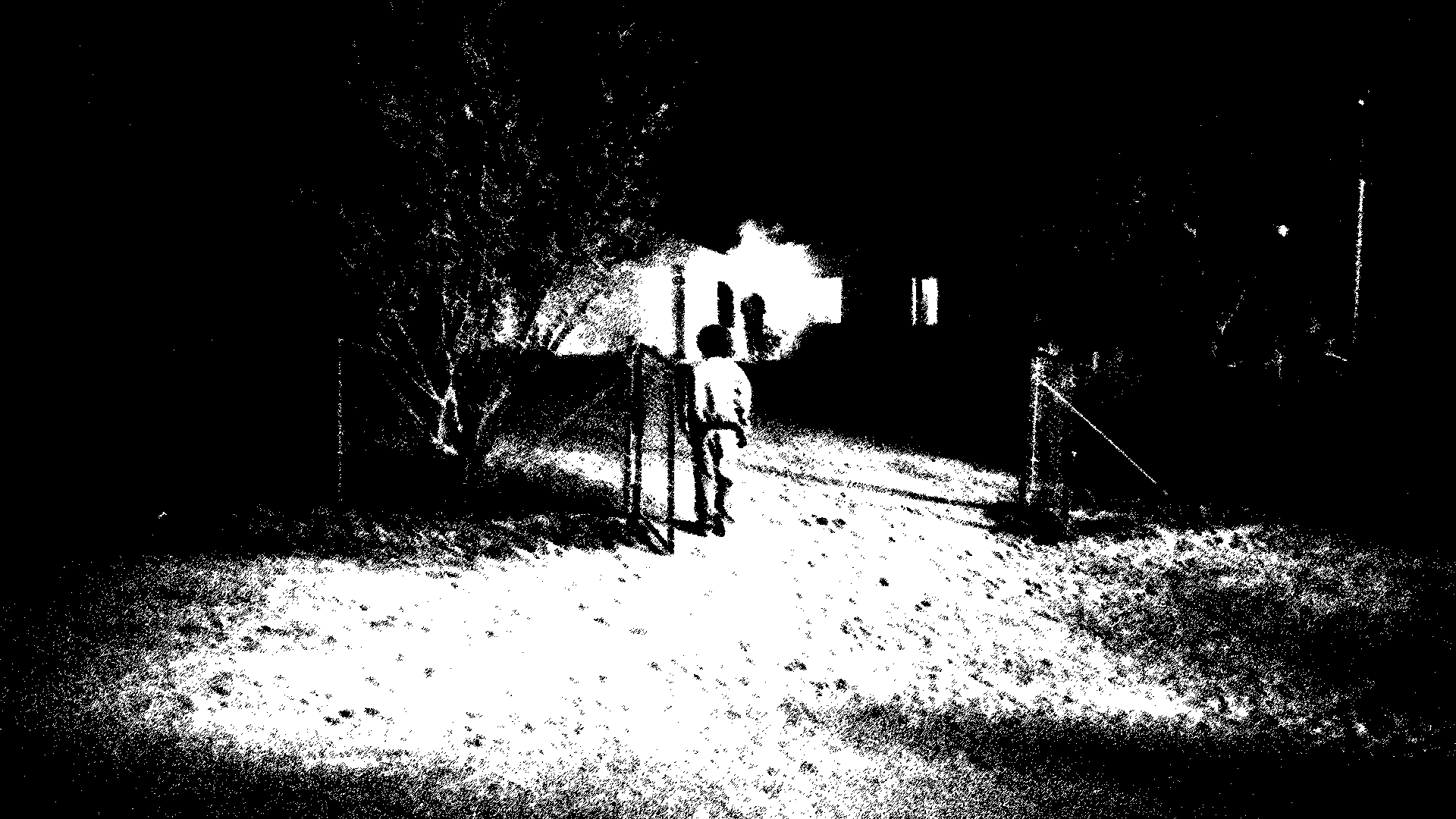
RAB: I’m pretty steeped in Dennis’ body of work and familiar with his biography. But my research leaves me less informed about your life, Zac.
ZF: Yah, nobody’s written a three-hundred page biography of me.
DC: Yet!
RAB: Can you tell me about your upbringing between France and America?
ZF: I grew up in the South of France. I’m from a rural town near Nice called La Gaude. My father’s American and my mother’s French, but I grew up only speaking French. When I was sixteen, I moved to the U.S. because I didn’t love living in that town. I basically didn’t speak English but learned it after I moved. After finishing art school in the States, I moved back to France and have been living in Paris for the past twelve years.
RAB: Watching Room Temperature, I note a removed alien-ness to how it looks at American culture. Did you ever feel like you assimilated into American life?
ZF: I don’t feel like I’m a part of American or French culture. I’ve always felt alien in basically any context. I don’t know if that’s cultural misunderstanding or something more deeply felt.
RAB: Dennis, do you feel similarly?
DC: Do I feel alien from American culture? Well, at the moment I do! [Laughs.] I grew up there and spent most of my life there. I felt alienated from what most people were interested in or liked. I’m not a very social person. I never liked going to parties or clubs. I’m not really introverted, but I’m a workaholic. I feel completely comfortable with my friends, but I always feel outside the general expectation and level of tolerance, especially in art.
RAB: Zac, at what point did your interest in the experimental or transgressive emerge?
ZF: Since pretty early, I was a geeky child with autistic-type interests. I wasn’t interested in literature until I was maybe sixteen, which is also when I started watching experimental films. I found James Benning around then; he was a huge influence. A bit later: Chantal Akerman. For literature, Dennis was one of the people I read most at the time. Before I met him, his blog served as an additional art school. Bataille was really important to me, though I haven’t read him since I was nineteen.
RAB: Can you describe some of the work you made before collaborating with Dennis?
ZF: I never really felt comfortable with what my practice was. I was making video art, but I was interested in sculpture and trying to figure out how to make sculpture with video. I never felt satisfied with the work I was making until I started making films with Dennis.
RAB: What was the birth of your friendship?
DC: It was just a coincidence. Zac had moved back to Paris recently. A friend of his emailed me and said, “There’s this guy named Zac. He just moved here and really likes your work. Maybe you guys would like each other.” I wrote Zac an email saying, “Hey, do you want to have coffee?” We hit it off and he showed me his work. We immediately bonded. It was a mind-meld; he just mentioned what he liked before he knew me, and it’s a lot of the stuff I liked before I knew him! We immediately wanted to make things. Initially, we had ideas for projects that weren’t films. We were going to make a book about Scandinavian amusement parks. We drove around Scandinavia and spent three weeks documenting every amusement park, but then we had the opportunity to make Like Cattle Towards Glow (2015).
RAB: I find that, for an artistic partnership to be successful, there needs to be a unity of ideals and also complimentary—though potentially distinct—approaches to art-making. Why does your collaboration work?
ZF: I’ve always had a hard time making work on my own and I don’t have as big an interest in showing my work as I should. With Dennis, we both really respect each other’s perspective and work ethic. When we’re starting to talk about a project or even a specific edit in a film, we develop a shorthand. It’s really exciting, it’s the opposite of alienation. We’re also super complimentary because Dennis is an incredible writer. I’ve always wanted to write, but could never figure it out; it’s excruciating for me to email. Instead, I focus on figuring out the images and relationship between visuals and performances while Dennis works with the performers. Casting we do entirely together. For editing, we return to a totally equal process. Dennis then insists we actually put the project into the world, which I might not be able to do if he wasn’t pushing it.
DC: We both want to make the same thing but we come at it from different places. Sometimes I’ll have an idea of how to achieve that thing but he won’t necessarily agree with me. We have to go through a whole process to find the right decision. Before our collaboration, Zac hadn’t really worked with narrative. Even in my most experimental work, I always work with narrative. So I bring narrative into the work, which is interesting for him to build his ideas around.
RAB: You mentioned disagreements. What’s your biggest creative dispute been?
DC: Never a big one and never things that last long. For instance, when casting, sometimes we’ll disagree on whether someone is “the person.” Or when we’re editing, sometimes I’ll think a scene should be one second longer and he’ll disagree.
ZF: We’re both very strong-minded about the nit and grit. We always try to set an ambition that’s beyond our reach and then try to find a way to achieve this unachievable thing.
DC: I don’t think we’d make something unless we felt it surpassed our prior work. I’m the same with writing. When I write a novel, it has to be something I don’t know if I can do. Room Temperature was a big step for us. We had to figure it out, and we did!
RAB: If your art is always trying to do something you’re not sure you can accomplish, is there a work in your œuvre you see as a failure?
DC: Not in ours! I have lots of things I haven’t finished. With I Wished, I spent a year-and-a-half writing. It wasn’t working at all, which is unusual for me. I put it aside and came back three years later to reinvent it. With Like Cattle Towards Glow, we’d never made a film before, so some parts have the charm of us trying to do something for the first time. I think it works, I think it’s a good film. But it might seem very naive to us now. With my books? No! I like all my books. I don’t think any of them are a failure.
ZF: Though all our work is about failure, I’m very happy with our films. Much of the work I’m interested in feels on the precipice of coming apart, but then, magically, it actually holds together. Our films are about that in a less conceptual way. I think they’re successful at depicting the extreme failure they risk.
RAB: Rilke says, “The purpose of life is to be defeated by greater and greater things.”
DC: There you go, there you go! All three of the films are about high ambitions that fail. We don’t plan it that way, it just ends up like that.
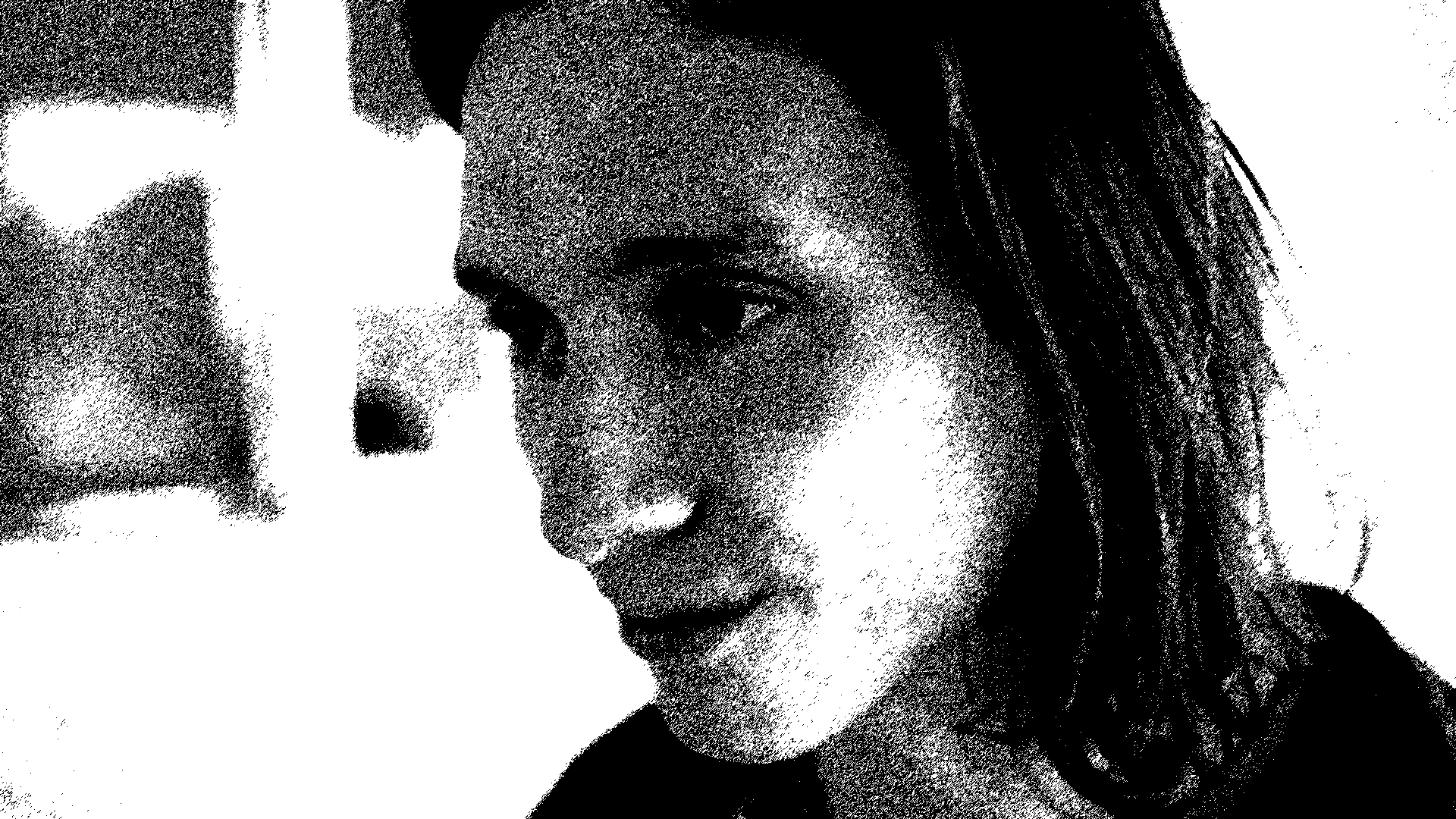
RAB: Room Temperature’s cast features mostly non-actors, with the exception of Ange Dargent, who I recognized from The Masturbator’s Heart (2023). What spawned his inclusion as the token francophone in this otherwise very southern California movie?
DC: The character always had to be alien from the others. I don’t think he was French in the script, but he was from somewhere else. Then we saw Masturbator’s Heart and thought he was extremely good. Even though what we were asking him to do was the polar opposite, we met him for coffee and knew he was Extra. He was cast eight months before we shot the film. We built the cast around him, except Stanya Kahn who we wanted to play the mother while we were writing the film.
ZF: Until Extra, all the performances in our films were very flat and disaffected. For him to have enough specificity to later be recognized in his ghost form, we wanted him to be hyper, enthusiastic, charismatic, yet also self-absorbed to the point of being inaccessible. Ange is like both his characters in Room Temperature and The Masturbator’s Heart on different days. He’s sincerely like that, but also he thinks very closely about performance.
DC: He’s not a normal actor. He hasn’t had formal training. He’s just this kid who likes to do stuff. In the film, Extra becomes a ghost and we wanted it to have a specific energy rather than be a drifting bog. We wanted it to be identifiable as Extra. We worked to give the camera’s movements an Extra energy.
RAB: I know for casting other roles you use a questionnaire where actors offer personal answers. What questions do you ask?
ZF: We’ve done that to some extent with all our films. Usually when we write the questions, it’s like a stupid high school “Who Are You?” cultural questionnaire; “What films do you like? What books do you like?” Erin Cassidy, Room Temperature’s casting director, took this to a Proust questionnaire level, though she added some questions she thought we’d like. It had lots of prying, philosophical questions. You get a really good sense of who someone is and how they like to be perceived watching them struggle with these questions.
DC: One of the questions was “What are your values?” It’s interesting to see someone struggle with that on the spot and also think, “What do they want my values to be?”
RAB: When you watch these tapes, what makes you gravitate towards a specific actor?
DC: It’s not the answers, it’s watching them talk. The questions open them up and show what they’re like when they think something’s funny or when they’re nervous. The questions take them all over the place to show a range. We like people who are thoughtful since there’s so much silence in our films. We want people who look like they’re really thinking without saying anything.
ZF: For that reason, the parts when they’re thinking about what to say next are often more significant than what they actually say. At this point, I don’t remember the questions. Some of these people who went on to be great friends and collaborators must’ve said some incredibly revealing things in these tapes. I still have the tapes, but it’d be unethical to go back and watch them.
RAB: How did you find the very isolated house the film centres around?
ZF: We did scouting elsewhere. It was an elimination process: the California of the suburbs, the desert, or the mountain area? We didn’t want the film in a densely populated area, because the characters had to seem isolated. It would’ve also been difficult with how much money we had. From there, we looked at a million places. Once we found that house, it was pretty immediate.
DC: The family is a strange family. Putting a family that strange in the suburbs would’ve made them seem more neurotic and crazy, but if you situate them in the desert, with nothing around them, you accept them more. I don’t know what people living in the desert are like.
ZF: Well, they’re all pretty crazy.
DC: I’d go crazy living in the desert too. And I did over the two months I was there. But it was a huge stroke of luck we ended up in the desert. We could make a lot of noise and there was no one there to complain.
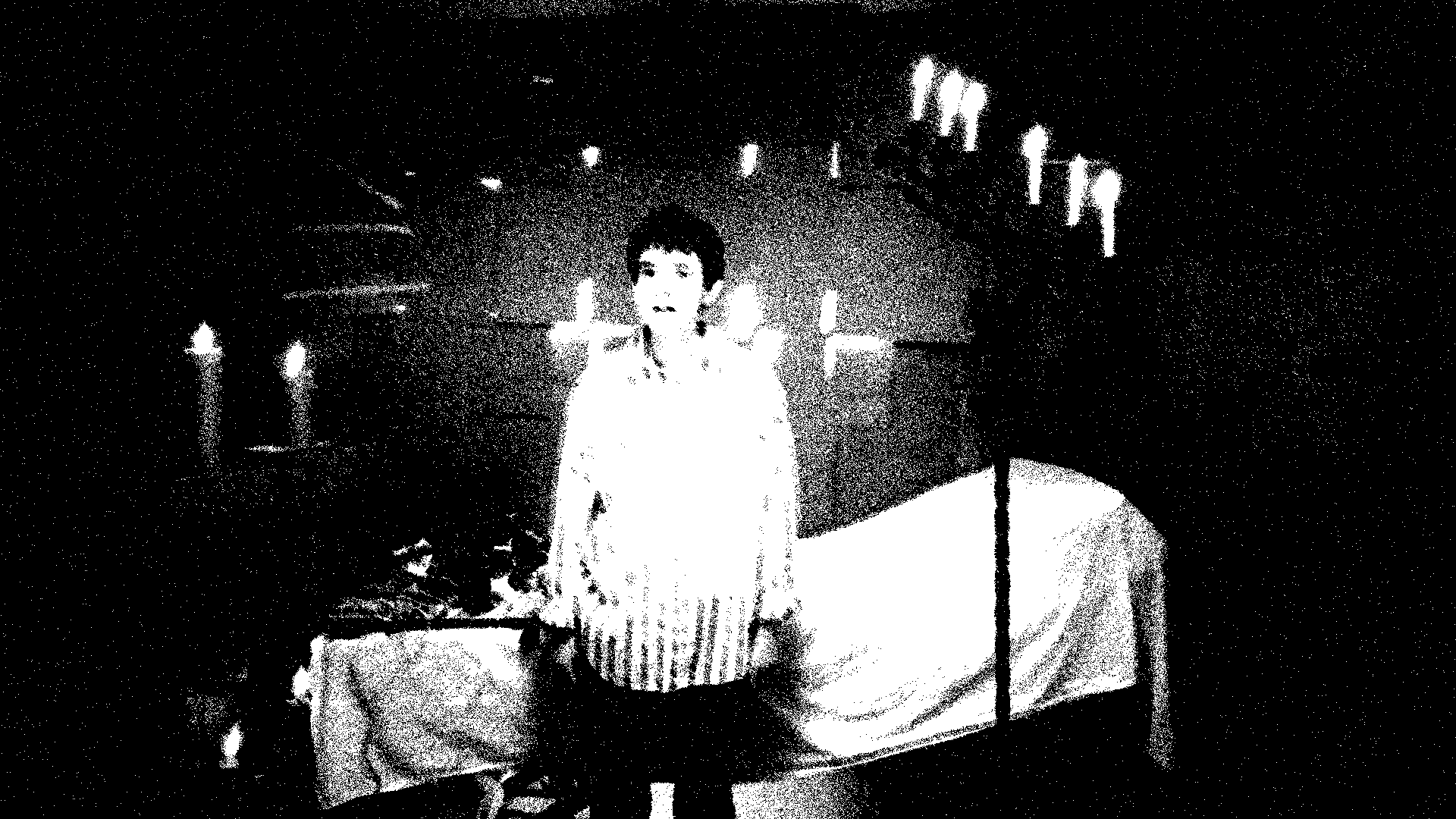
RAB: The end credits have a special thanks for John Waters. What was his offering?
DC: I don’t know why he’s the first name, we probably should’ve buried him in the middle so people don’t notice as much. He’s an old friend of mine. He’s a great guy and his work is heroic. He came from no film background at all and just does what he wants. We both really admire him. He’s a model for us and has also been kind about our films. He picked Room Temperature as one of the ten best of the year. That’s massive for a film like ours.
RAB: There’s a part in Dennis’ book Closer (1990) where John, the punk portrait artist, goes into an ostensibly haunted house, rather than a home haunt, and wonders, “Had the world gotten so generally ugly and fucked up since he was a kid that a haunted house seemed kind of quaint?” You’re both aficionados of the home haunt. Do you align with John’s sentiment?
DC: I grew up in a city called Arcadia. They were building what ended up being called the 210 Freeway through a wealthy area, so there were all these abandoned mansions for the twenty years of its development. I used to go hang out there, explore them, and do drugs. That’s where the John thing came from. A home haunt is almost completely different. I used to make them as a kid. Zac and I both think it’s a great, fascinating art form: beautifully amateurish, sincere, and naive.
ZF: I came to home haunts really late. They weren’t a thing in France at all. When I got to the US, I was immediately fascinated with anything brand new. I never had a relationship with horror films or anything to do with fear. Those things never scared me. And so, my approach [with home haunts] was always analytical. I looked at them as a weird formalist. They feel like an ideal artform, a total artform. They’re experiential, theatre, cinema, and performance. They have costumes and architecture that moves. They have both the actual house you’re going through and what the house is supposed to be if you give into the suspension of disbelief. The people are playing monsters, but they’re also the father, son, mother, and daughter.
RAB: When you visit home haunts, do you ever get swept up in the sensation? Or are you always walking through as analytic formalists?
ZF: We never get swept up. [Laughs.]
DC: Oh, that’s not true. We get swept up in a different way. Every once in a while you come across one that’s genius, that wants so badly to be something… But I’m never scared.
RAB: You’re never scared in home haunts specifically or in general?
DC: If you’re walking through a hallway and someone goes “Boo!” you get startled, because that’s what happens. But no, I almost never get scared. I love horror movies, but I have no favourite horror movie. The only horror movie I saw that scared me was TheBlair Witch Project (1999) right when it came out. Now, there’s been a billion movies exactly like it. But early on, you knew it was fake but there was the possibility it wasn’t. I saw it with a bunch of friends. We were so freaked out we stood in front of the theatre for almost an hour going, “Oh my God! Oh my God!”
I write about things that are extremely shocking but they’re not shocking to me. I’m just taking them apart and figuring out how they work.
RAB: When I watch films by writers-turned-filmmakers, it always alters how I read their work after. From an author’s perspective, has making films changed how you write at all?
DC: Since I started making films, it’s been the primary thing I’m interested in doing. I wrote I Wished, but that’s the only book I’ve written since. I’m much more interested in making films than writing fiction now. I did these collaborations with Gisèle Vienne for a long time. That was a transition because I was writing for spectacle and writing for specific bodies. It contributed to how I make movies. But has filmmaking changed how I think about my work? It improved my dialogue. A script only has the dialogue that’ll end up in the film. I’ve learned how to jam as much as possible into dialogue.
ZF: Have our films changed how you read Dennis’ work, Ryan?
RAB: It has changed how I read the books. That’s inevitable when you get a concrete visual language to associate with words. Like most readers, I’d create my own visual lexicon otherwise. In the William S. Burroughs piece “Notes on Frisk,” he describes Dennis’ writing as if he’s going inside the anatomy of the characters. I don’t totally identify with how he characterizes the work, but he describes Dennis as an incredibly interior writer. The films are the opposite: they’re full of long, static wide shots. That’s not the formal language I would’ve associated, but maybe that’s something Zac brings to it.
DC: That’s interesting. I probably am a more interior writer than Burroughs, but everyone is! [Laughs.] You can’t do that in film, it’s a completely different form; it needs to be suggestive. Like you said, a novel is a formula. The reader has to take complete responsibility for what they’ve built. But in film, the film itself has to take responsibility; you’ve created this thing that’s solid with faces and names. You can’t put as much burden on the viewer. Films that try to do that like Pasolini’s Salò are silly. They just seem like silly gore movies. It’s such a different medium and you have to work within its limitations. You can do a Cronenbergian thing, but that doesn’t interest me.
RAB: Can you elaborate on your Salò diss?
DC: I’m not a fan! You have to skim the novel—nobody can fucking read it—, but it’s very disturbing because you’re building that world in your fucking head. With [Pasolini’s version], it’s all fake eyes being poked out and it becomes sadistic. I don’t find sadism interesting. There’s a lot of problems with that movie, like making it just about facism. I understand you have to do reductive things when you make a film, but I just think it’s silly. It’s not shocking or disturbing. I’m me, you know what I do. I’m not easily shocked and certainly not by horror movie effects. Cruelty isn’t something I’m excited by, and that film’s about cruelty.
RAB: Would you say that’s the reason why there are basically no violent images in your last couple movies, aside from diegetically fake Halloween-type gore?
DC: Maybe that’s part of it! We want to make suggestive things. When Extra gets killed, we set it up very carefully so it doesn’t seem real; it feels like a joke. We want to gradually sink in, “I guess he’s dead.” Even in Like Cattle Towards Glow, there’s nothing really explicit.
RAB: Aside from the second segment with its mass molestation.
DC: Sure, there’s a finger going up the butt or a mouth on the dick. But it could’ve been worse.
RAB: It’s not super graphic, but the impression is more violent than the actual images.
DC: Yah, definitely.
ZF: The way Dennis writes sex is about being inside it rather than making spectacle. When we made Cattle, I had this naive ambition to try and achieve that in film form. Very quickly we realized it wouldn’t work. But working within the constraints of film is much more interesting than trying to force something it’s not conducive to.
DC: The performers were paid like $200. We had no money, so we couldn’t expect them to put up with much.
ZF: It was more interesting to work with peoples’ constraints than to outdo them.
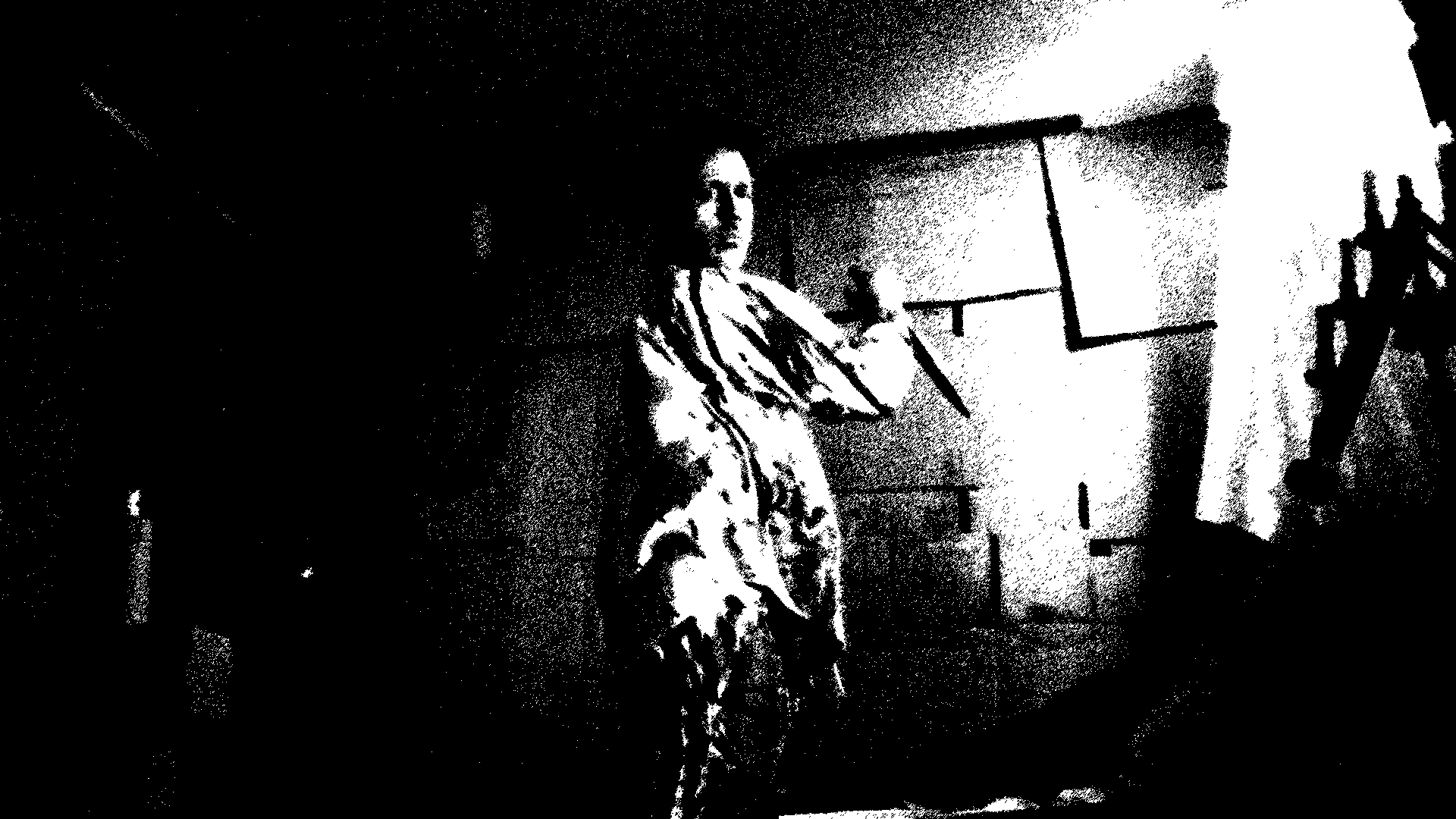
RAB: There’s a new James Benning film this year, as there often is. It’s called Eight Bridges (2026). The description is just a short quote from Benning himself. It says, “It seems to be the time to consider bridges.” Are there any subjects you’d like to make work about but haven’t found time yet?
DC: Assuming I don’t die of natural causes soon, Zac and I have all sorts of things we’d like to make films about. It’s usually money that prevents us. We don’t want to make films that cost a lot of money and no one will give us a lot of money to make films. As much as Zac and I are obsessed with haunted houses, we’re equally obsessed with amusement parks. I’d love to make a film that incorporated an amusement park, but it costs a fucking fortune to rent one.
ZF: There’s a hundred films I’d like to make! But I have to be cautious not to let my attention split apart when we’re working on one. Because film is so demanding and must be sustained so long-term, it requires a weird ascetic act where you say, “This is the only thing I’m interested in for the next three years.” But now I get a weird pleasure from that kind of thing. There’s a documentary I’ve always wanted to make. It’s taken a hundred different forms in my head. It’s about the representations of fireworks and how they’ve changed from the 1600s to now.
RAB: Dennis, is your disinterest in working with a bigger budget primarily about avoiding the hopscotch of a bigger production?
DC: It’s just practical. The kinds of films we make will never be money-makers. We’ll probably never make a film that gets a real release in theatres. Maybe it’s a frugal thing, but I don’t want to spend that much money to make something so idiosyncratic. But also because you can’t make a bigger film without compromising, without having people tell you what to do. Zac and I make films with complete control. You can’t make a movie for three or even one million dollars where that’s the case. And I don’t know what we’d do with that kind of money. It’d be nice to make some strange set in a sound studio or something. But also, I don’t like those kinds of films. Experimental films have always been my favourite films. And even the narrative films I like hardly cost anything. Zac, do you want to make million-dollar films? Am I a curmudgeon?
ZF: I’m not as allergic to the idea as you are. I don’t have a frugal bone in my body. But I’m also only interested in making films with complete control. Filmmaking is really collaborative which is wonderful. But in our limited experience, film finance people are not great collaborators. Their interests don’t intellectually or artistically expand the object. If someone gave us $17M to make a film—yes, we would absolutely find an incredible film to make. And it would be good for the film, I don’t think it’d be a problem. Or maybe we’d make four films with it.
DC: Room Temperature was funded through donations. It took four years to get the money. I don’t know if we’d do that again. We knew it wouldn’t make money, so we didn’t want anyone to think they’d get money back. Zac and I have never gotten a penny. We do the whole thing for free.
RAB: At least until Hollywood comes knocking at your doors…
ZF: [Laughs.] Is there a Hollywood anymore?
RAB: Or when Netflix comes pounding…
DC: That’s the closest thing now!
[This interview has been edited for length and clarity.]