That’s Me in the Corner: the confession of an objectùm-sexual pervert
by Madeline Stevens
from Issue 3
I’m writing because I need to talk to somebody about this. This isn’t even a confession, I feel no need for absolution.
I grew up going to a school with no right angles. Following the architectural philosophy of German esotericist Rudolf Steiner, every perpendicular intersection of my Waldorf School’s architecture was rounded. The smoothness of the buildings also extended to the furniture, the play structures, every toy, desk, book, and chair. Steiner believed that his curvilinear architectural style was "brought down from the spiritual world” and could facilitate human access to the astral plane. As with most Waldorf School students, I was unaware of the deeper reason for this roundness.
Deprived of sharp corners, I became obsessed with the angles (both convex and concave) of everyday objects and spaces outside of my school’s compound. Alone in my room, I would compulsively explore the corners of things with my hands, feet, body, and mouth. I would wrap myself around my dresser, pressing and holding my body against the white veneered particle board with enough pressure to leave pink imprints on the skin of my belly and legs. I gnawed notches into a protruding corner of my wooden desk for my teeth to lock into as I tried to swallow the point of the object. This particular exercise became a test of my endurance. On bent knees with my head tilted, I would let myself drool onto my legs until my pants were soaked. In the corner behind my bed, I would stand facing the wall, eyes closed, pressing my head and my knuckles into the crevice as hard as possible until I could hear my pulse and feel it echo in my fingers and wrists.
Once, I gently opened the lips of my vagina to encase one of the square vertical beams attached to my vaulted bed. At first, I pushed hard against the post, it was painful but in a satisfying way. After a few trials, I learned that sliding my lips up and down the vertical length of the post, my body in a sort of thrusting crab-walk position, brought a pleasurable sensation. Needless to say, it was my bedframe that gave me my first orgasm.
It was not until I encountered the Objectùm-Sexuality Internationale (OSI) website that I gained the language to articulate my feelings. OSI is an international online community of self-identified “objektophiles” founded by Swedish architectural model builder Eija-Riitta Eklöf-Berliner-Mauer (1954-2015) in 1999. Objectùm-sexuality (OS) is a sexual orientation that can be simply described as romantic and sexual love for objects. According to the OSI website, Eija-Ritta’s love for the Berlin Wall started as a child in the early 1960’s when she began to see images and videos of “him” on television. In an interview quoted in The Berliner, Eija-Ritta describes how she’s always found “slim things with horizontal lines very sexy” and goes on to state that, “The Great Wall of China’s attractive, but he’s too thick — my husband is sexier.”
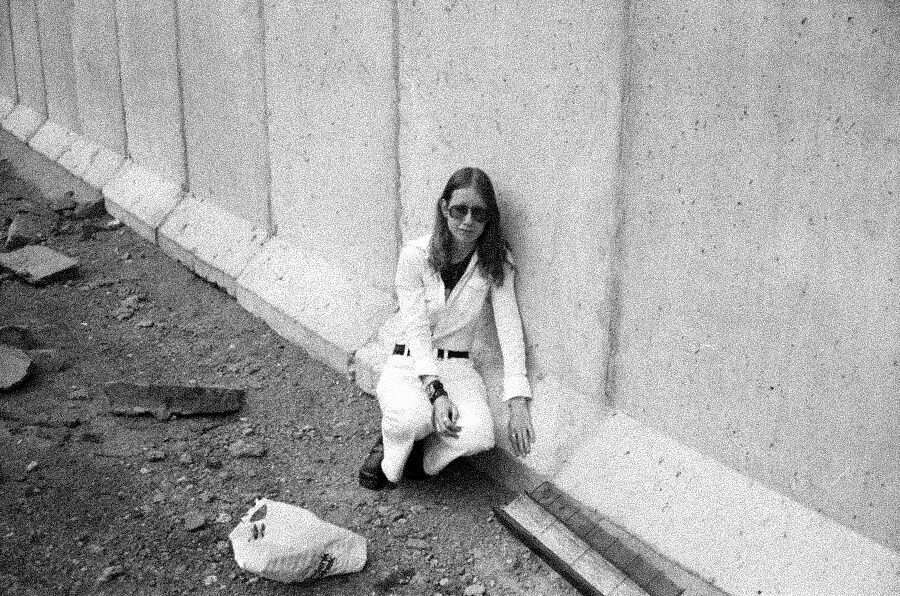
Eija-Ritta’s career in model-building spawned from a youth spent obsessively constructing scale reproductions of The Wall with any scrap materials she could get her hands on, each representing a desperate attempt to alleviate her desire to be close to him at all times. After over a decade of longing, on June 17th 1979, Eija-Ritta married her love-object while wearing a white leisure suit and a pair of yellow-tinted aviator glasses. With the assistance of an animist who translated for The Wall, he and Eija-Ritta exchanged their solemn vows surrounded by a small group of family and trusted friends. Though marriage to inanimate objects or buildings is not legally recognized in Sweden, Eija-Ritta Eklöf consecrated her and her husband’s union by legally changing her last name to Eklöf-Berliner-Mauer (Eklöf-Berlin-Wall) and having her husband’s portrait tattooed on her forearm.
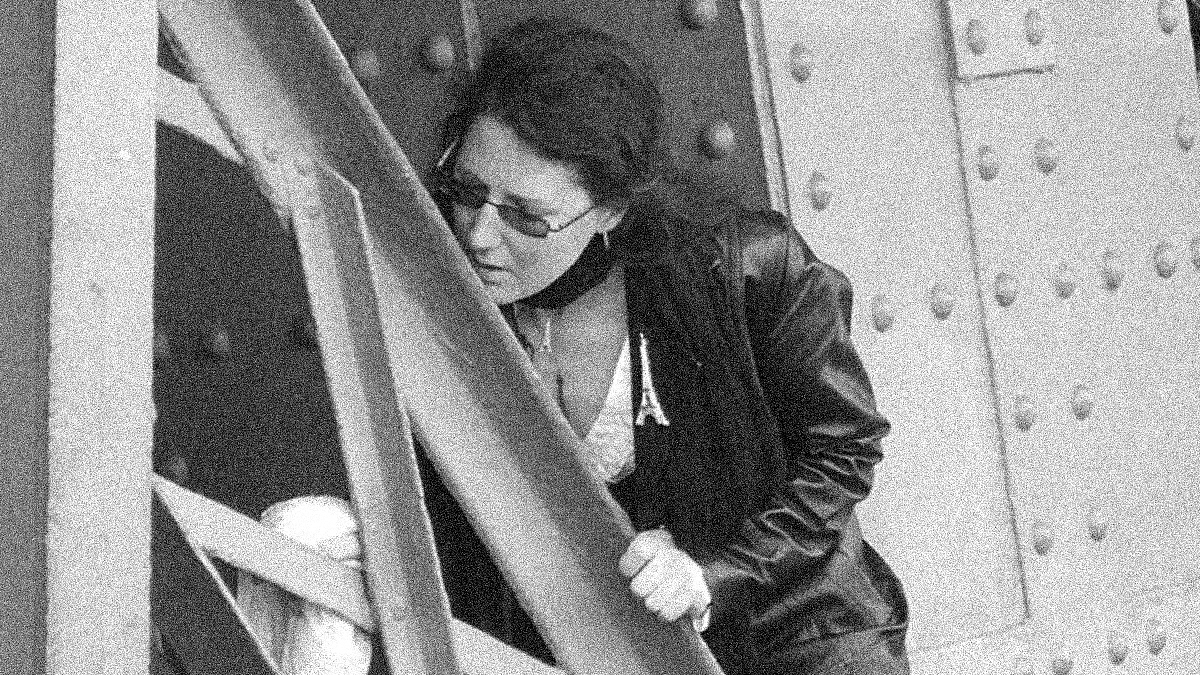
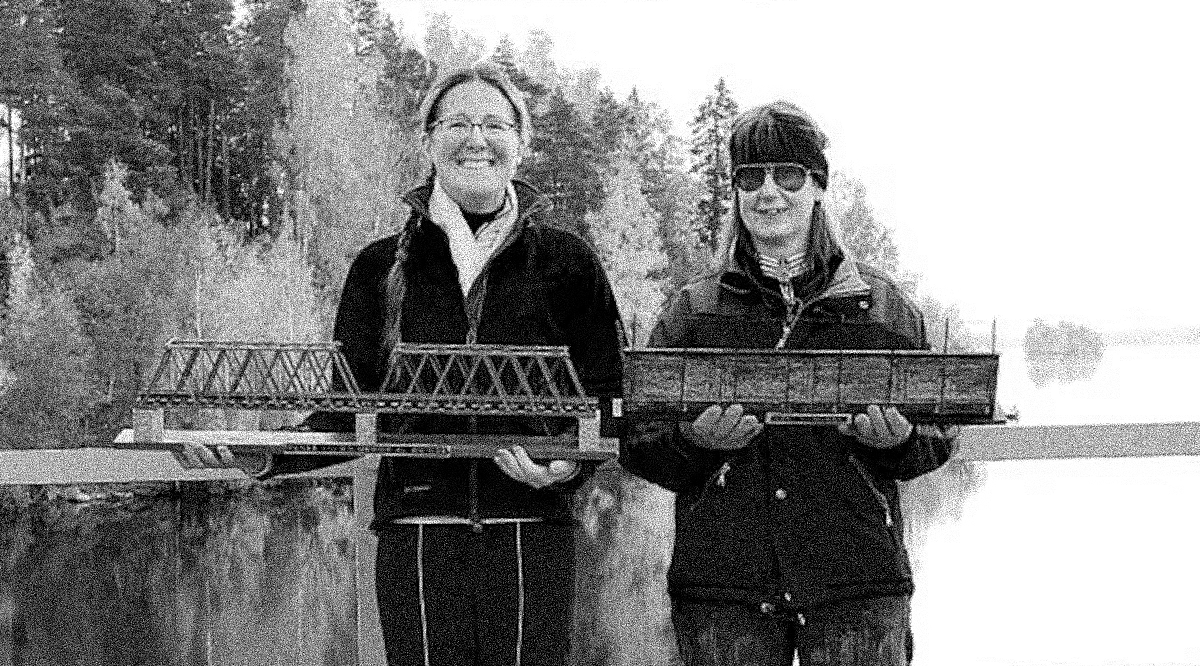
For over two decades Eija-Ritta enjoyed what she understood as a monogamous relationship with her husband. Even after the fall of the Iron Curtain ravaged The Wall’s body, stripping him of his life’s purpose, Eija-Ritta’s love endured. In 2006, twenty-seven years into her marriage, Eija-Ritta met Olympic archer and martial artist Erika LaBrie (b. 1972) through the OSI online network. Like me, Erika had been searching for language to describe her sexual proclivities, feeling that she could no longer ignore her deep love for iron bridge structures and more specifically, the "matriarch of bridges,” the Eiffel Tower. A pixilated image on the OSI website shows Eija-Ritta and Erika standing together on a bridge holding models of their love interests like game trophies, the caption reads “Erika and Eija-Ritta - OS Sisters.” Although the poor image quality makes it difficult to see Erika’s features, if it were in focus, I am certain we would be able to see Erika giving Eija-Ritta’s wall the side eye.
Eija-Ritta inspired Erika to publicly come out of the closet about her relationship with the Eiffel Tower. In contrast to Eija-Ritta’s intimate wedding, Erika’s commitment ceremony with The Tower was uploaded to YouTube and subsequently went viral. Following Eija-Ritta’s footsteps, after being wed, Erika had a portrait of The Tower tattooed on her chest, the point of the structure positioned between her breasts, reaching up to her sternum. As if to challenge her “OS sister,” rather than hyphenating her last name, Erika did away with her maiden name LeBrie and legally became Erika Eiffel. Being multilingual and media-trained from her career as an Olympic athlete, Erika was well-equipped to handle the onslaught of media attention following her relationship with The Tower entering popular discourse. It wasn’t long after that Erika took on the role of spokesperson for the OS community. Perhaps due to her North-American upbringing or comparative youth, Erika’s OS lifestyle was much more progressive than Eija-Ritta’s; within months of her nuptials with The Tower, Erika let it be known that she was also in a romantic and sexual relationship with Eija-Ritta’s wall.
In 2015, Eija-Ritta died in a house fire. The flames cremated her with all of her models and ephemera related to her and her husband’s life together. That same year I moved to Toronto at age seventeen to attend art school. Coming from a rural unincorporated town of three-hundred rednecks and aging draft dodgers, I was entranced by the city and all the quotidian intricacies of the subway system, the swarms of commuters, the whurring and screeching of traffic. Toronto is a grid city filled with rectangular prisms made of glass and steel and concrete. I worked as a waitress at an old diner in Young-Dundas Square and amongst the abundant right angles of the towering highrises I was constantly wet.
Art school was one long attempt to articulate the libinal energy the city’s angles aroused in me—I felt that there was some immaterial force pulling my body towards its corners, compelling me to wrap myself around them, to force my body into them, to rub against them until my skin was abraded and bleeding. My greatest goal during the first years of my art education was to dissolve the boundaries between my body and the seemingly impenetrable surfaces of the city by any means necessary. I attempted to accomplish this through movement and performance and by fabricating a series of wearable apparatuses functioning like prosthetic skins that swallowed me and the angular objects I found myself attracted to.
Until recently, even I was somewhat blind to my own motivations. I used elaborate art jargon to talk around the sexual impulses that inspired my work and vehemently denied the erotic undertones of my artistic output. The repression of my desires manifested in a portfolio of what I now realize is objectophilic smut, a university education in art and architectural theory, and an addiction to sink humping porn. In retrospect, I wonder if Steiner knew the masturbatory potential of right angles and denied children access to them as to prevent fixation on pleasures of the flesh. After nearly twenty years of sustained intellectual and sexual interest in right angles, I am still unsure if I lost my virginity to my bedframe or if our relationship was just an elaborate way for me to get off.